Hybrid project management in real life: An iterative TYPO3 upgrade with relaunch and flexible planning
Introduction
Today, we are giving you an honest insight into one of our projects. We upgraded the website www.segger.com step by step from TYPO3 v9 to v13, fundamentally modernizing the entire installation and adding numerous new features along the way.
In this article, I will explain our decision to opt for incremental upgrades, as well as the underlying hybrid project management model.
A brief introduction to the client and the website project
SEGGER specializes in software development for microcontrollers used in intelligent control processes for process automation. With its J-Link debug probe, SEGGER offers the world's most widely used debugger for embedded development.
The company develops and manufactures its products in Monheim am Rhein, Germany, but also has locations in the USA and China.
The TYPO3 installation is a corporate website presenting the product portfolio and a wide range of technical information. It includes 2,500 active pages and around 30,000 active content elements. We took over support in 2019 with TYPO3 7.6.
The website offers several special features, such as location-based content and OS-controlled software downloads.
In addition to the TYPO3 website, SEGGER operates several other systems, including a knowledge base, a blog, and two shops.
SEGGER's editorial team works intensively on its website every day. This regularly leads to new requirements, for which we develop and implement solutions in close cooperation with them.
It's a dynamic and varied project, just as one would wish.
However, various factors have led to the accumulation of legacy issues in the database and code, which we needed to resolve.
Content Inventory at the start of the project
We began with a comprehensive Content Inventory, during which we compiled an overview of the existing content in the various systems.
We then jointly identified target groups, developed personas, and assigned them to the individual systems.
Based on these findings, we then planned the content that would be required going forward.
The project objectives
We defined these technical and content-related goals before starting the implementation:
- Upgrade to the latest TYPO3 version
- Modernization of all technical components
- Revision of the design based on the new branding guidelines
- Relaunch of the product pages
- Target group-oriented provision of content
Our first consideration: Should we do a full relaunch using the waterfall model?
Several factors supported the view of setting up a completely new website in the latest TYPO3 version and migrating any existing content that was still needed at the end:
- The planned new design with accessible templates and new content elements, tailored to requirements
- Legacy structure of content and navigation
- Technical debt in the project code
- The significant version change from TYPO3 v9 to v13
Setting up a new installation "from scratch" can therefore have its advantages, even if long-term operation of the existing instance appears to be more sustainable in principle.
However, this would also mean running the new website in parallel with the current one for a certain period of time.
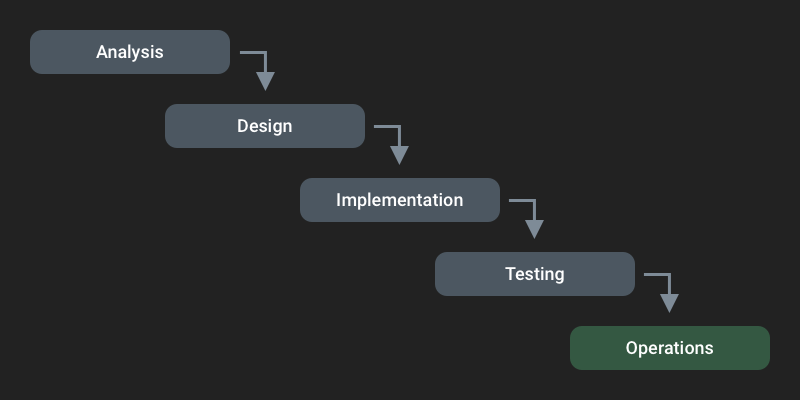
Characteristics of the waterfall model
Advantages of the waterfall method:
- High planning security for large-scale projects
- Clearly defined goals
- Good time and cost estimation
Downsides of the waterfall method:
- High initial conceptual effort
- Little flexibility due to the strict workflow
- The result is only available at the end of the project
Why did we decide against the waterfall model?
During the Content Inventory, SEGGER reorganized its product range from four to five product categories.
This change was a sensible measure at the time, but of course, it required adjustments to the existing system and had an impact on the further planning of the relaunch.
This transition perfectly illustrates the importance of being able to react quickly in this client project.
We therefore decided to proceed with small-scale upgrades to the existing installation. We will now describe this approach in more detail.
Our hybrid project management model
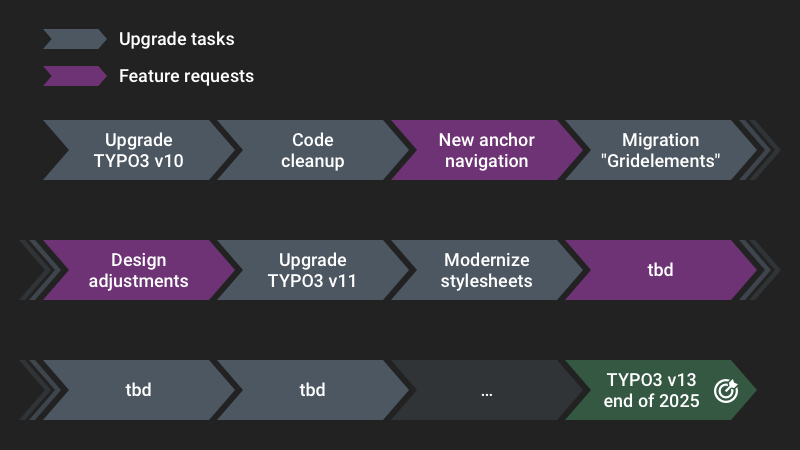
What characterizes our hybrid model? We combine the respective strengths of the waterfall and agile models. The project objectives described above provide the framework and ensure planning reliability. At the same time, an iterative approach ensures the necessary flexibility.
In detail, this is how our upgrade project was carried out:
- All upgrades and modernizations are split into small work packages that can be delivered quickly
- The next steps are regularly coordinated with the client and documented in a roadmap
- This roadmap always leaves room for new features and necessary adjustments
- Only a single goal is defined with a fixed deadline right from the start: the upgrade to TYPO3 v13 should be completed no later than the end of 2025
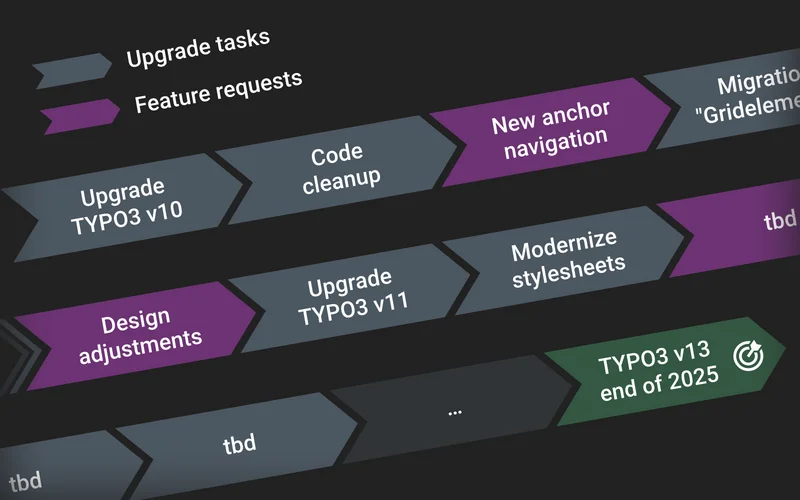
The image illustrates our workflow. After upgrading to TYPO3 v10, we began the initial cleanup work. In practice, we divided this into small, practical tasks (e.g., "Merge and simplify button styling").
Afterward, we developed and implemented a new feature. It was followed by further upgrade tasks and requested adjustments.
Planning the next steps
Every two weeks, we met with the people involved. At these meetings, we planned the upcoming work and presented the latest innovations.
We coordinated all work that directly affected the client with them in advance to ensure their input and approval. After all, changing to new content elements, for example, has a direct impact on daily work.
Conversely, we carried out modernization and cleanup work in the background independently. If this led to improvements in Core Web Vitals or had other impacts, we also reported on this.
After each TYPO3 upgrade, the most important tasks to be completed before the next upgrade step were defined.
This always left room to respond to any adjustments that were required at short notice.
Advantages of the hybrid model
Avoiding parallel operation and content freezes
Supporting both the current and the future TYPO3 installation in parallel would have tied up more capacity on both sides.
Furthermore, parts of the existing content would have had to be migrated before the new system could go live. During this period, a content freeze would have been necessary, meaning a temporary interruption of editorial work.
Instead, during the deployment of major changes, there were only a few short content freezes of about an hour, which we scheduled for the early morning hours. The frontend of the website remained available throughout this time.
Quick response to new requirements
Assuming we had opted for parallel operation, how would we have implemented short-term change requests simultaneously in the existing and new TYPO3 installations, given their different architectures? This could have led to delays and additional work.
However, thanks to our small-scale approach, we were able to deliver new features quickly. Any upcoming changes to the API that may occur with a subsequent TYPO3 upgrade could already be taken into account during implementation.
All improvements are available immediately
Each upgrade has improved the user experience of the TYPO3 backend, made the editors' work easier, and increased their satisfaction with the CMS. This also holds true for the many small optimizations that we have continuously made to the system.
The performance of the website has also been improved through continuous enhancements.
Manageable database migrations
If we had relaunched with a new TYPO3 installation, we would have had to migrate some of the existing content to the new system at the end. Switching to new, specialized content elements in a newly structured page tree could have made this quite challenging.
Instead, we were able to update existing content in small steps, for example, by first converting gridelements to container elements. Then, selected container elements and their child elements were replaced with tailor-made content elements.
Drawbacks of the hybrid model
We have not identified any real disadvantages. However, two points are worth noting:
- The planned project duration increases with this model because the upgrade and further development of the website are carried out in parallel
- At the end of the upgrade project, legacy data remains in the database, which must be cleaned up afterwards
A project completion right on schedule
We completed the upgrade to TYPO3 v13 on schedule at the beginning of November 2025.
Throughout the project, we made over 1,000 commits in Git. Of course, this figure is only of limited significance, as a single commit can encompass anything from a minor update of a single extension to a complete conversion of the existing page layout, including all necessary migration scripts.
In a manually maintained changelog, we have recorded around 100 significant innovations for this period that have a direct benefit for the client.
A future without upgrade projects
SEGGER's motto is: "It simply works". And from now on, this also applies to the website and other systems:
As part of our Continuous Upgrading program, we keep all components up-to-date, including all future CMS upgrades.
From now on, we can focus entirely on content-related topics with our client.
Please feel free to share this article.
Comments
No comments yet.